If you’re curious about the woman behind the jar, keep reading. This is easily in the top 10 scariest, most vulnerable things to post—but it’s time.
Hey there. I’m a self-taught chef, homesteader, and founder of my own canning company—starting fresh at 40.
After 20 years of burning the candle at both ends in the corporate grind, the (family owned) company sold to Corporate America, the chaos hit, and I watched everything I’d built vanish due to the acquisition. Turns out, sacrificing your life for a job doesn’t guarantee it’ll stick around.
That’s when I made a promise to myself: never again would I put my success or future in anyone else’s hands. No more trusting suits with my livelihood. I took control and started my own business—Chaotic Canning.
This blog isn’t about products or sales (well, not yet, anyway). It’s about me—my journey, my struggles, my victories, and all the chaos in between.
One year ago, I came dangerously close to losing my life. For 18 months, I’d been sick—visiting doctor after doctor, undergoing every test imaginable, and getting no answers. Everything came back normal… for the most part. (A few tests “slightly elevated, but not concerning,” some masses under my left rib—non-cancerous, so “nothing to worry about.”) The doctors had no clue what was wrong, but I was slowly getting worse.
One of my last doctor appointments, I jotted this note in my phone: “(Doctor to remain nameless) – Try to avoid stress and eat a Mediterranean diet.” I had lost so much weight. I couldn’t stomach food. Meat had become my worst enemy, and I was crippled by stress and anxiety.
It took my husband insisting I go to the ER one morning before he left for work. I resisted—why bother? I’d seen every doctor in town, and no one could find anything wrong. But when I finally went, I was already so far gone they rushed me by ambulance to the ICU at the University of Utah.
From there, things are blurry. To be honest, the last few years are blurry or I have no recollection at all. I barely remember going to the ER. At the ICU, they ran more in-depth tests than anyone had before. They discovered my pancreas had stopped producing lipase and protease—enzymes that break down fats and proteins. No wonder I couldn’t eat. With my pancreas out of commission, my liver had been forced into overtime.
And my liver was already exhausted before things went off the rails.
I drank—sometimes casually, sometimes not at all, and sometimes far more than I should’ve. From the outside, I was getting things done. Running businesses. Managing life. Keeping it all together. But behind the curtain, off the clock on weekdays and during each weekend, there were moments that looked a lot like functioning alcoholism.
I’m not going to skirt around that. I drank in ways that were, at times, absolutely concerning. It wasn’t every day, and I didn’t fall apart—but that doesn’t mean it wasn’t doing damage. I just didn’t see how deep it ran until my body forced me to.
When things finally crashed, my liver took the fall for years of me pushing too hard, ignoring the signs, and trying to outwork the warning bells. Those bells were a cacophony of stress, anxiety, exhaustion, and the deafening pressure I put on myself to be everything to everyone—career powerhouse, perfect wife, amazing daughter, ride-or-die friend, doting aunt, badass farmer, full-time homemaker, chef, baker, gardener… every title, every role, every single day. And yet, I felt like I was failing at all of them.
Truth is, when I lost my career, I lost myself. I’d been gone for years, to be honest. Completely wrapped up in a job with no boundaries. Late-night calls, weekend client messages, emails that never ended. It was fast-paced. High stress. But damn it—I was good at it. I excelled.
After the collapse, I hit a wall. What now? Who am I? I questioned daily if I mattered, or even deserved to be here. I didn’t have a degree. I had a trade career, and I was at the top of it—every license, every certification. But now what? For nearly a year, my response to everything was the same: “I don’t know.”
I felt lost. Deeply hurt. Unmoored. I had lost friends over who I’d become. And for the first time, I understood how someone could choose to leave. I felt invisible. Unwanted. Like I didn’t matter.
And I don’t say that lightly. I’ve lost too many loved ones to suicide to ignore the weight of that feeling.
But rock bottom has a way of cutting through the noise—and let me tell you, nothing says “life reset” quite like waking up in the ICU thinking, Well… shit.
The doctors pulled my husband aside and asked if we had children. When he said no, they replied, “It’s probably time to call family to come say their goodbyes. We’re not expecting her to make it through the night.”
Recovery was—and still is—brutal. My body and mind went through absolute hell. It wasn’t graceful. It was diapers and drains and hair falling out in clumps. Swelling that made me unrecognizable. Endless IVs that bruised every vein. I fell a lot and couldn’t get back up. My home is entirely hardwood or tile on the main floor. I fell on hardwood and split my chin open deep enough for stitches. I remember lying on the cold, laundry room tile one night after a fall up my cement stairs coming in from the garage at 3am, crying, hoping for my husband to wake up and help me. I laid there, shivering and bawling for four hours. I wasn’t sleeping. I wasn’t functioning. They mentioned hospice. I could smell death. I could feel it. My husband saw it. The doctors had issued me an “end” date of August, 2024.
But I didn’t die.
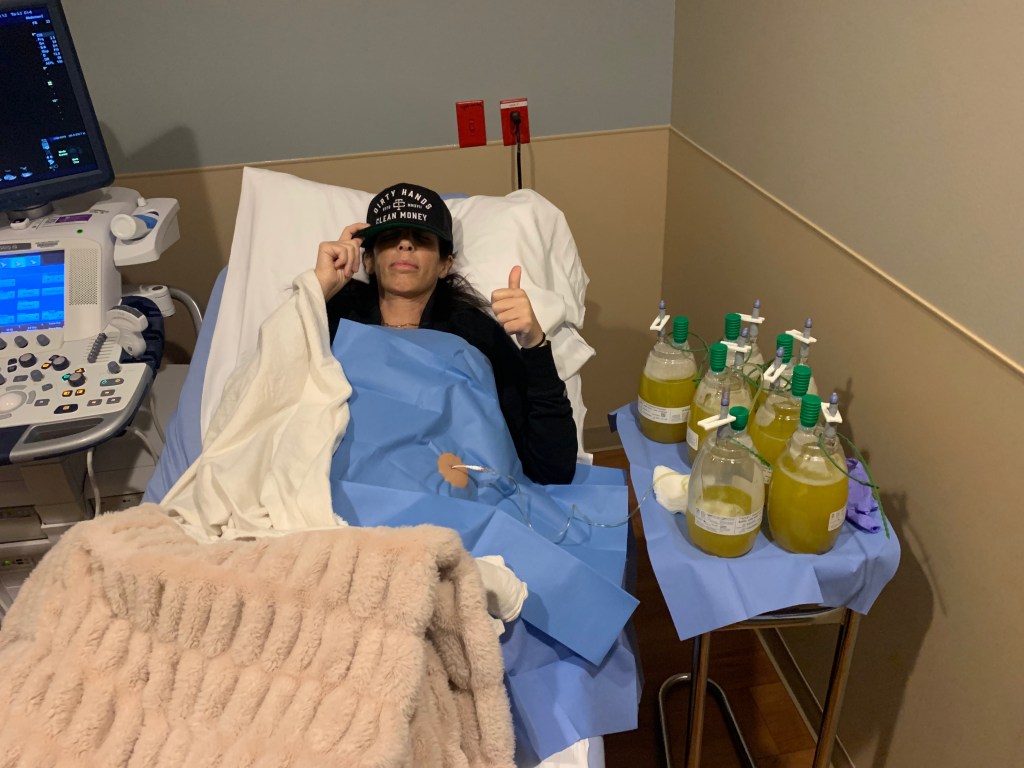
Each day passed in silence or numbing reality TV. I was told to stay down. Rest. Eat. Let them know when it was time to call hospice.
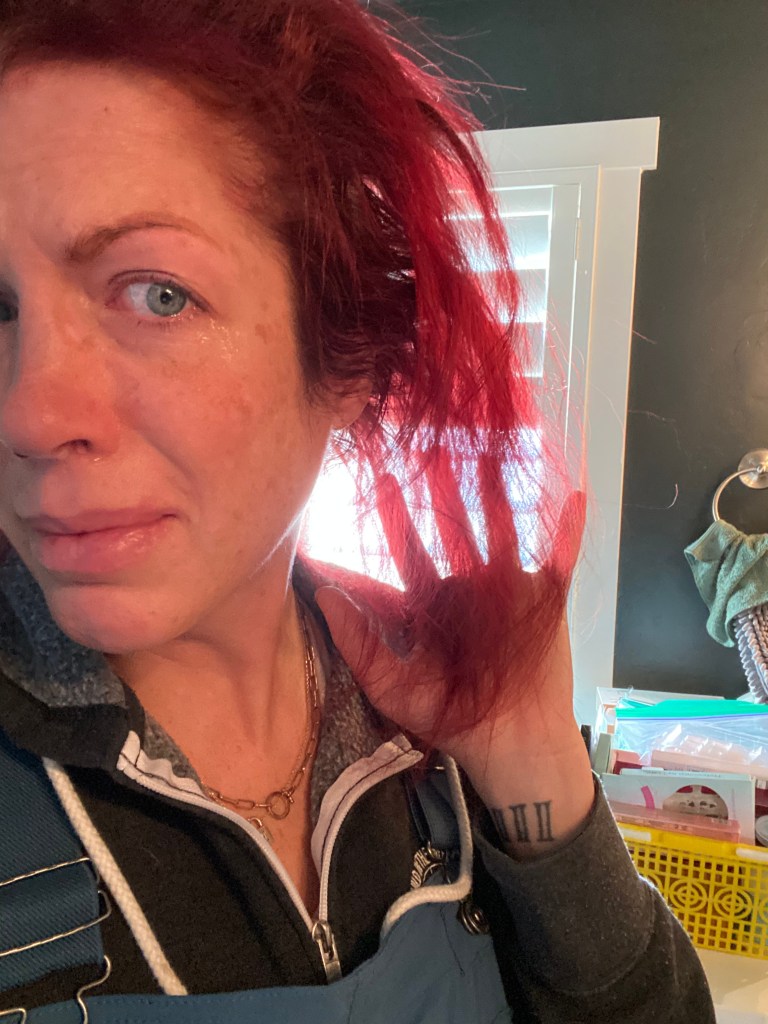
But I didn’t stay down.
I kept getting up—slow, shaky, but up. I dragged myself to the kitchen, jars clinking in the background. Orders were coming in. I kept canning. Preserving. Working. Posting. Because if I could still create something, still nourish someone, still fill a jar—then I wasn’t done yet. Chaotic Canning didn’t just give me purpose. It gave me a reason to fight.

My canning company saved my life.
Everything started to shift—not in some overnight epiphany, but little by little. I chose different. I slowed down. I paid attention. I stopped drinking—not because of a pamphlet or intervention, but because my body staged a mutiny and said, You’re done now.
And I realized something: I knew more than my career. More than any title or certification. I grew up in this. On farms, in gardens, beside my grandmothers in the kitchen—canning, making bread, baking cookies. Juicing, preserving, sewing. I knew how to turn the water, tend crops, harvest, and feed a family until the next harvest came again.
Growing up poor and humble sure is a great way to learn self sufficiency and real life skills.
Here’s the thing—I knew my passion all along. And now, I understood my purpose. A new road map had appeared in my hand and amongst all of the blurs, noise and constant worry from countless doctor appointments- I finally saw a route out of the unhealthy place I’d unpacked my bags.
I believe in self-sufficiency. In growing your own food. In preserving it. Canning it. Knowing what’s in it. I don’t romanticize hard work—I just know its value. I don’t think I was born in the wrong decade. I think I was born exactly when I needed to be. Because someone has to keep these traditions alive. Someone has to teach. To pass it on to our peers and younger generations.
Because it fucking matters.
This blog? It’s part of the rebuild. It’s where I get to tell the truth behind the jars, behind the chickens and the homemade, from-scratch everything, and the backyard chaos. It’s a space to share what happens when a woman loses everything… and decides to grow it all back, wild and on her own terms—at 40.


 Chaotic Canning Co.
Leave a reply to Vandy Louise Cancel reply